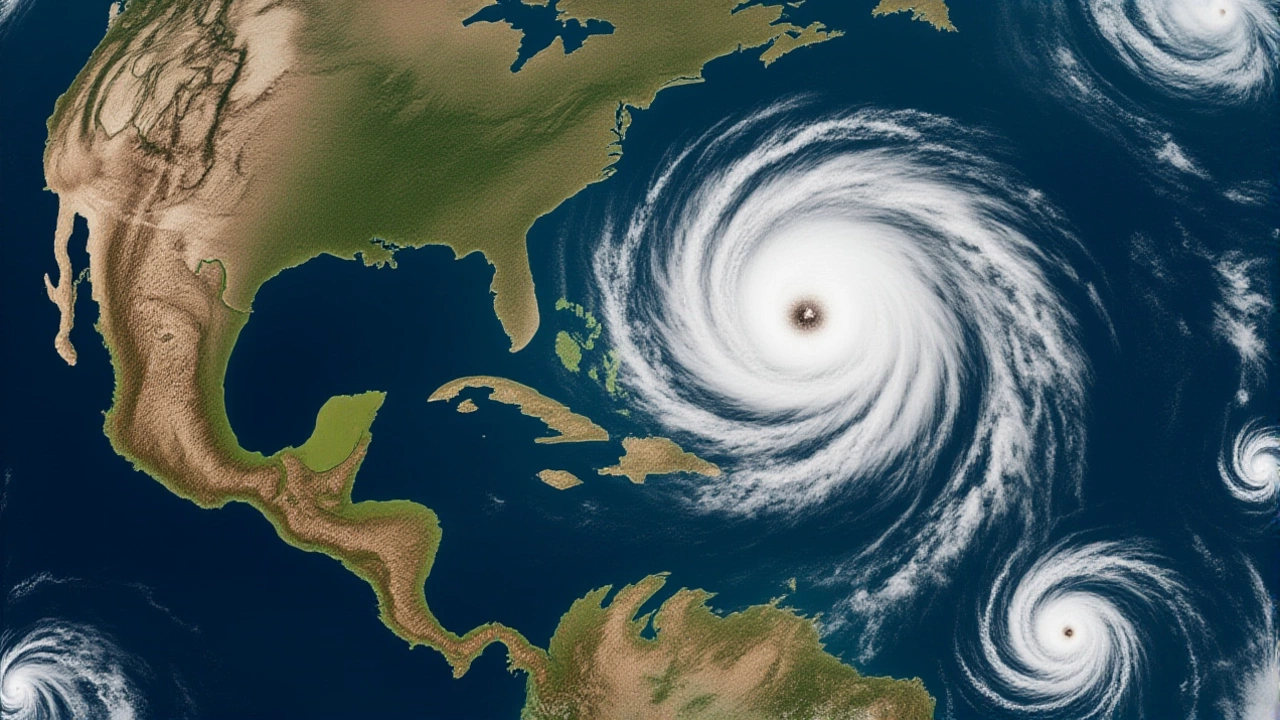
It’s happening again. The World Meteorological Organization (WMO) has officially signaled the return of El Niño, predicting a high probability of development by mid-2026. This isn't just another weather update; it's a major shift in the planet's thermostat that will ripple through agriculture, disaster preparedness, and daily life across the globe. As of early April 2026, we are watching the Equatorial Pacific warm up rapidly after a brief neutral pause following last year's La Niña.
Here’s the thing: climate models don’t usually agree this strongly. But right now, they do. Wilfran Moufouma Okia, Chief of Climate Prediction at the WMO, noted that after a period of neutral conditions earlier this year, forecasters have "high confidence" in the onset of El Niño. The data shows sea-surface temperatures rising fast, pointing to a likely return as early as May-July 2026.
The Numbers Behind the Forecast
Let’s look at the specifics because the odds are staggering. Most authoritative climate monitoring centers—including the National Oceanic and Atmospheric Administration (NOAA), the Australian Bureau of Meteorology, and the UK Met Office—are aligned on one trajectory. There is an 82% chance El Niño forms during the May-July 2026 window. Even more striking? There’s a 96% chance it will persist through the Northern Hemisphere winter of 2026-27 (December 2026 to February 2027).
This prediction is backed by physical evidence, not just computer simulations. Warmer-than-average subsurface waters are accumulating in the equatorial Pacific. Think of it like a pot of water heating up on a stove; the heat is building beneath the surface, ready to break through. This accumulation is the key precursor for El Niño development. While ENSO-neutral conditions are expected to linger through boreal spring, the shift toward summer and autumn looks decisive.
What This Means for Temperatures and Rainfall
If you’re wondering how this affects your backyard, the answer depends heavily on where you live. Forecasts indicate a "nearly global dominance of above-normal land surface temperatures" for the May-June-July 2026 season. Basically, expect hotter than average days almost everywhere on land.
Rainfall patterns will follow typical El Niño characteristics, but with some intense regional variations:
- United States Southeast & Florida: Expect way above normal rainfall in December 2026. This increases flooding potential and creates a rougher severe weather season from November 2026 through early March 2027.
- California & Southwest: January 2027 could bring very wet conditions to California, while the southern plains, desert southwest, and north Gulf Coast may see beneficial rain.
- Northern US & Canada: Drier and warmer conditions than usual are forecast as the Pacific jet stream shifts south.
- Pacific Northwest & Appalachians: These areas might experience drier conditions compared to historical averages.
The European model predicts approximately 13 storms for the upcoming season, slightly below the average of 14.5. However, intensity often matters more than frequency. During El Niño events, trade winds weaken, pushing warm water east toward South America. This alters the jet stream, bringing moisture into unexpected places while leaving others parched.
Global Ripple Effects
The impact extends far beyond North America. In South America, countries like Peru, Ecuador, and northern Chile typically face flooding risks. Meanwhile, the Amazon region often experiences drought, threatening biodiversity and local communities. Southern Brazil and northern Uruguay usually receive increased rainfall, which can be both a blessing for crops and a curse if floods occur.
For Australia, the outlook is starkly different. The movement of warm water toward South America often allows drought to develop down under. This increases wildfire risk and raises the potential for record heat waves. It’s a reminder that when one part of the world gets wetter, another often gets dangerously dry.
Interestingly, the transition from La Niña to El Niño doesn’t happen overnight. The final La Niña Advisory from NOAA confirmed that the tropical Pacific returned to neutral conditions recently. This neutral phase makes seasonal forecasting harder, as there’s no strong pattern driving the atmosphere yet. But with subsurface heat building, the pendulum is swinging back.
Understanding the ENSO Cycle
For those new to climate science, El Niño and La Niña are parts of the El Niño-Southern Oscillation (ENSO) cycle. El Niño means "Little Boy" in Spanish, while La Niña means "Little Girl." They typically last nine to twelve months but can persist for years. On average, they occur every two to seven years without a strict schedule, though El Niño tends to appear more frequently.
Why does this matter now? Because preparation saves lives and livelihoods. Farmers need to adjust planting schedules. Insurance companies are recalculating risk models. And governments are preparing emergency response teams for potential floods or wildfires. The details of exactly how strong this event will peak remain somewhat unclear, but the direction is set.
Frequently Asked Questions
When exactly is El Niño expected to start?
Climate models predict an 82% chance of El Niño forming between May and July 2026. If it develops then, there is a 96% probability it will continue through the Northern Hemisphere winter of 2026-27, specifically from December 2026 to February 2027.
How will El Niño affect weather in the United States?
The U.S. Southeast and Florida are likely to see above-normal rainfall and increased severe weather risk from late 2026 into early 2027. California may experience wetter conditions in January 2027, while the northern U.S. and Canada could face drier and warmer temperatures due to a shifted jet stream.
What is causing this specific El Niño event?
The primary driver is the accumulation of warmer-than-average subsurface waters in the equatorial Pacific. As these warm waters rise to the surface, they alter atmospheric pressure and wind patterns, weakening trade winds and triggering the El Niño feedback loop.
How does this compare to previous El Niño events?
While strength varies, the current forecast shows high model agreement, which is notable. Previous events have caused significant global temperature spikes. This time, nearly global above-normal land surface temperatures are expected for the May-July 2026 period, suggesting a potent warming influence.
Who issued these predictions?
The predictions come from the World Meteorological Organization (WMO), led by Chief of Climate Prediction Wilfran Moufouma Okia. They are supported by data from major agencies including NOAA, the Australian Bureau of Meteorology, Japan Meteorological Agency, and the UK Met Office.